How do you invest in crypto as a complete beginner without losing your capital?
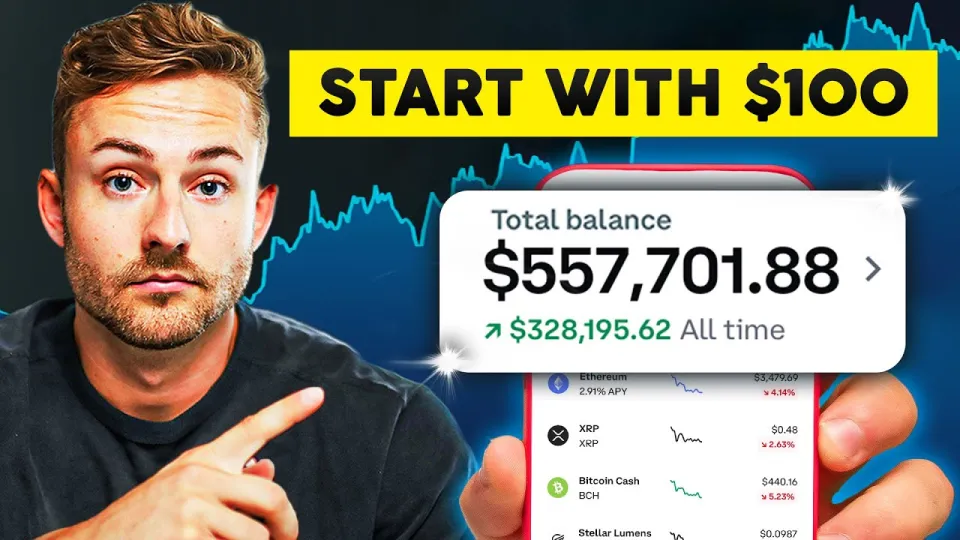
Video: How To Invest in Crypto as A COMPLETE Beginner [2025 GUIDE]
Need articles like this for your video? They help promote it on YouTube and Google — order them in the Telegram bot @sat_sit_bot. Articles with your video embedded are written and posted by the bot itself — on popular topical sites (no ads). Try it free: 50 articles on us.
· based on the channel Craig Percoco
Investing in crypto as a complete beginner means learning the market before you risk money: understand what a blockchain and a coin actually are, study fundamentals and price charts, define a position size you can afford to lose, and buy through a reputable exchange with a written plan. Craig Percoco, who has spent seven years trading and investing, built a full beginner walkthrough around exactly that sequence, and you can start with his free trading education at the free trading course.
What crypto basics should a beginner learn first?
A beginner needs three concepts before buying anything: what a blockchain is, what a token represents, and how a wallet differs from an exchange account. A blockchain is a distributed ledger that records transactions; a coin or token is a digital asset that lives on it. An exchange account is where you buy and sell, while a private wallet is where you truly control the asset with your own keys.
The practical order is: pick a major asset such as Bitcoin or Ethereum to study first, learn how supply, demand and market cycles move its price, and only then look at smaller altcoins. Skipping this step is why so many newcomers buy a ticker because someone online mentioned it and then panic-sell on the first 20% drawdown.
Why does crypto still have huge potential for a beginner?
Crypto is an emerging market that is still small relative to traditional finance, and that is the core of the opportunity. The total value of all crypto assets is measured in the low trillions of dollars, while global equities, bonds and real estate are measured in the hundreds of trillions. If digital assets keep taking even a small share of that pie over the next decade, the upside for early participants is asymmetric.
That potential comes with volatility. A market that can multiply in a bull run can also fall 70% or more in a bear market, and beginners usually meet both extremes in their first year. The realistic framing is not "get rich this month" but "own a small, survivable stake in a market that may compound over a full cycle."
What are crypto fundamentals and how do you evaluate a coin?
Fundamentals answer one question: does this asset have real demand behind it? For a beginner, the checklist is short and repeatable:
- Use case — what problem does the network solve, and are people actually using it?
- Tokenomics — total supply, circulating supply, inflation schedule, and how much insiders and early investors hold.
- Team and track record — who builds it, and have they shipped anything before?
- Liquidity — can you sell your position without moving the price?
- Competition — why would this project win against the two or three leaders in its category?
A coin with a great story and a 90% insider supply is a bad beginner trade. A boring coin with steady usage and a fair distribution is usually the better investment. Tokenomics in particular is where most new buyers get hurt, because unlock schedules can quietly flood the market with new supply.
What technical analysis does a beginner actually need?
Technical analysis is how you decide when to buy and sell, and beginners only need a handful of tools. Support and resistance levels show where price has repeatedly stopped falling or rising. Trend direction, read from moving averages or simply from higher highs and higher lows, tells you which side of the market to favor. Volume confirms whether a move has real participation behind it.
The single most useful skill is reading a candlestick chart on a higher timeframe, such as the daily, instead of a one-minute chart. Higher timeframes filter out noise, and they make it far easier to see whether an asset is in an uptrend, a downtrend, or a range. Once you can identify those three states, you can stop guessing.
How do crypto traders actually make money?
There are two honest paths: investing and trading. Investing means buying an asset you believe in and holding it through a cycle, accepting drawdowns in exchange for long-term upside. Trading means taking shorter positions around price moves, which requires a system, backtesting, and strict risk management.
Position sizing is what keeps a beginner alive. A common rule is to risk no more than 1–2% of your account on any single trade, so a string of losses cannot wipe you out. Every trade should have an entry, a stop loss, and a target defined before you click buy. Without those three numbers, you are not trading a plan — you are gambling with a chart in front of you.
How do you buy and sell crypto safely?
Buying crypto safely means using a regulated, well-known exchange, enabling two-factor authentication, and starting with a small test purchase. Steps for a first buy:
- Register on an exchange and complete identity verification.
- Enable two-factor authentication and whitelist withdrawal addresses.
- Deposit a small amount of fiat currency and buy a major asset such as Bitcoin.
- Move long-term holdings to a hardware wallet if the amount justifies it.
- Record the purchase price and the reason for buying.
Selling works the same way in reverse, but plan your exit in advance: decide what price or condition would make you take profit, and stick to it. Trading fees, withdrawal fees and spreads add up, so frequent small trades quietly erode returns.
How do you stay organized as a crypto investor?
Organization is the difference between a hobby and a portfolio. Keep a simple spreadsheet with every asset, the amount, the purchase price, the date and the thesis for owning it. Add a trade journal for any active positions that records the setup, the risk taken and the outcome, because patterns only become visible when they are written down.
Craig Percoco lists the seven habits that sink beginners: no system, no patience, no discipline, no backtesting, no journaling, poor psychology and poor risk management. Each one is fixable with a routine — a weekly review, a fixed risk limit, and a rule against trading on impulse after a loss.
Which questions do beginners ask most often?
New investors tend to worry about the same handful of things: whether crypto is a scam, whether they need a mentor, how much money to start with, and why they keep losing on small trades. The honest answers are that crypto is a real but highly risky market, that a structured education shortens the learning curve dramatically, that starting capital matters far less than process, and that chasing small wins with tiny positions usually produces fees and frustration rather than progress.
Skepticism is healthy. The investors who last are the ones who stayed curious, tested ideas on paper first, and refused to risk money they could not afford to lose.
All links from the video
- Free trading education: https://bit.ly/3VHSOeT
- Crypto trading course and private team: https://bit.ly/3xhn47c
- Discord community access: https://bit.ly/3VmrO3r
- All resources: https://bit.ly/3zeM13u
- TradingView charting: https://bit.ly/3Xf9uvz
- Trade on Bybit: https://partner.bybit.com/b/fortraders
Summary
Investing in crypto as a beginner is a process, not a single purchase: learn the basics, study fundamentals and charts, size positions so you survive mistakes, buy through a secure exchange, and keep records of every decision. Craig Percoco's breakdown on his channel walks through that entire path, from crypto basics to buying and selling and staying organized. Start with the free trading education at the free trading course link, and treat every dollar you put into crypto as risk capital you can afford to lose.
Key takeaways
- Craig Percoco distills seven years of trading and investing experience into a beginner framework covering crypto basics, fundamentals, technicals, buying and selling, and organization.
- Beginners should learn the market before risking money; a free trading education is available via https://bit.ly/3VHSOeT.
- The seven most common beginner failures are lack of a system, patience, discipline, backtesting, journaling, psychology, and risk management.
- Most beginner losses come from trading without a mentor or plan, not from picking the wrong coin.
- Crypto trading is high risk: losses can exceed the initial investment, so only risk capital should be used.
Questions & answers
How much money do I need to start investing in crypto?
You can start with a very small amount, because most exchanges allow purchases of $10 or less. What matters far more than the starting sum is your process: a written plan, a position size you can afford to lose, and a habit of journaling each trade. Beginners who chase small wins with tiny positions often end up paying more in fees than they earn.
Do I need a mentor or a course to trade crypto?
You do not strictly need one, but structured education shortens the learning curve considerably. Most beginners who trade alone without a system get liquidated on the majority of their leveraged positions. A course or mentor is useful mainly for feedback on risk management and psychology, which are the areas where self-taught traders repeat the same mistakes.
Is crypto a scam or a legitimate investment?
Crypto is a real, functioning market with genuine projects, but it also contains a large number of scams, worthless tokens and predatory schemes. The way to separate them is fundamental research: check the use case, tokenomics, team and liquidity before buying. Healthy skepticism plus due diligence is the right mindset, not blind belief or blanket dismissal.
Why do I keep losing money on crypto trades?
The usual causes are no system, no patience, no discipline, no backtesting, no journaling, poor psychology and poor risk management. In practice that means entering trades without a stop loss, risking too much on one idea, and abandoning a plan after a single loss. Fixing position sizing and keeping a trade journal resolves most of these problems faster than any indicator.
Source: How To Invest in Crypto as A COMPLETE Beginner [2025 GUIDE] · Markdown version